Regulatory & Technical Updates
North Carolina Launches New PMP Tool to Strengthen Dam Safety and Storm Preparedness
October 30, 2025
A dam’s hazard classification is not a physical feature of the structure. It is a conclusion about what could happen downstream if the dam failed.
That conclusion carries real consequences. It affects spillway requirements, inspection frequency, emergency planning, and, for some smaller dams, whether the structure is regulated under North Carolina’s Dam Safety Law. Yet many classifications were assigned years ago using limited topographic data and without a dam breach analysis.
They do not always need to change. But they should be supported by the conditions that exist today.
North Carolina places dams into three hazard classes under 15A NCAC 02K .0105. The classification is based on the consequences of failure, not the likelihood that the dam will fail.
| Class | Hazard | General consequence of failure |
|---|---|---|
| A | Low | Limited damage, generally involving agricultural land, unoccupied buildings, or low-volume roads. |
| B | Intermediate | No probable loss of life, but potential damage to roads, railroads, utilities, isolated homes, or commercial and industrial buildings. |
| C | High | Probable loss of life or serious damage to homes, commercial or industrial buildings, important utilities, major roads, or railroads. |
North Carolina’s inventory includes roughly 7,471 dams. Approximately 3,267 are considered jurisdictional, including about 1,551 Class C dams, 229 Class B dams, and 1,487 Class A dams. According to NCDEQ’s regulatory impact analysis, the Dam Safety Program processes 100 to 275 initial classifications and updates each year, but only about 25 to 31 result in a change in hazard class.
For an owner, the difference between classes can be substantial. Higher classifications can mean larger spillway requirements, more frequent inspections, and additional emergency-planning obligations. NCDEQ estimates that a spillway upgrade resulting from reclassification can cost $250,000 or more.
Classification can also affect whether a smaller dam qualifies for an exemption. State law generally exempts a dam that is less than 25 feet high or impounds less than 50 acre-feet, unless its failure could cause loss of life or significant property damage. In other words, size and downstream consequences have to be considered together.
Most classifications will hold up when reviewed. A closer look may still be worthwhile when:
A standard breach analysis maps the area that could be affected if the dam failed. That is essential, especially for evaluating a sunny-day failure. During a major storm, however, some downstream flooding may occur even if the dam remains intact.
Incremental damage analysis separates those effects. The same storm is modeled twice: once with the dam remaining intact and once with the dam breaching. Comparing the results shows how much additional depth, velocity, and damage are attributable to the breach. Rainfall inputs for these evaluations can now be developed using NCDEQ’s statewide PMP Study and Evaluation Tool, which replaced guidance dating to the 1970s.
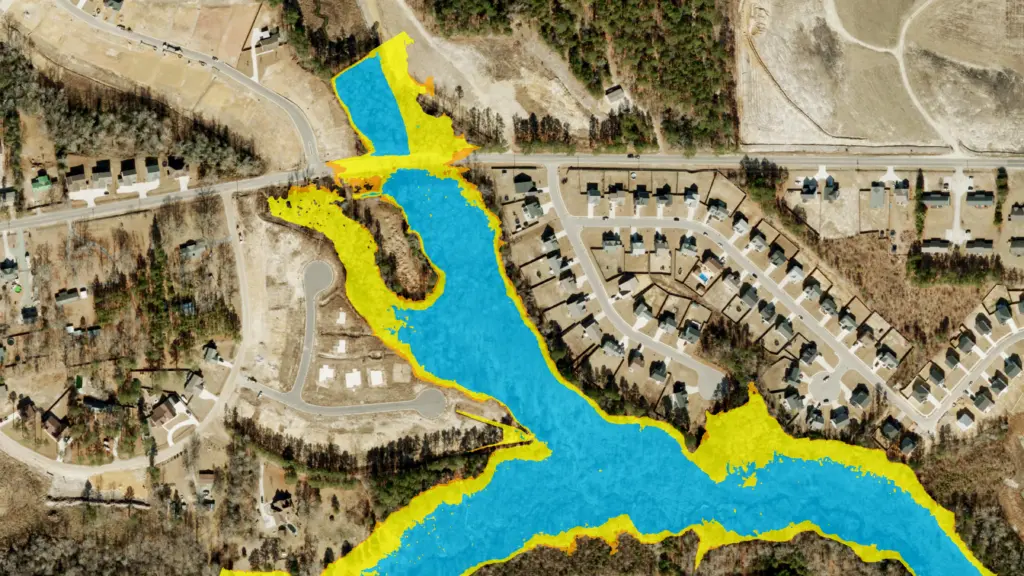
Modeling the same storm with and without a dam breach isolates the additional downstream consequence caused by the failure.
Sometimes the difference is clear and a high hazard classification is well supported. In other cases, the breach may add only a small amount of water to an area already flooded by the storm. The conclusion depends on the site, the failure scenario, and the specific consequences downstream.
The analysis is an investment, but it can be small compared with the cost of carrying an unsupported classification or completing an unnecessary structural upgrade. NCDEQ’s regulatory impact analysis estimates $5,000 to $15,000 for sunny-day and rainy-day breach analyses and $10,000 to $50,000 for an incremental damage analysis, depending on complexity.
A hazard classification should reflect measured consequences, not an assumption that has simply stayed in the file.
A review can also show that a dam should be classified higher. A road that once served a handful of properties may now carry substantial traffic, or new homes and utilities may have been built below the dam. The goal is not to force a lower classification. It is to establish the right one with current information.
For a dam within a proposed development, the question is not limited to what exists downstream today. Roads, homes, utilities, grading, and stormwater facilities can all change the consequences of a future dam failure.
That makes hazard classification an early planning decision, not a permit detail to address after the layout is fixed. A road crossing or building pad is much easier to move on a plan than after approvals and construction.
North Carolina is readopting its dam safety rules, and proposed revisions to 15A NCAC 02K are open for public comment through October 16, 2026. Several proposed changes are directly relevant to classification:
The proposed criteria create clearer paths to both outcomes. More specific road and economic thresholds may support a higher classification in some cases, while incremental analysis may show that an existing classification overstates the consequence attributable to dam failure. The rules are still proposed and may change before adoption.
RiskHydro recently completed breach analyses and hazard classification evaluations for two North Carolina dams with very different starting points.
Lupo Lake Dam was previously classified as a Class C, high hazard dam without a supporting breach analysis. Modeling showed that dam failure would not create the level of additional downstream consequence reflected in that classification. NCDEQ approved an intermediate hazard classification and determined that the dam qualified for an exemption from the Dam Safety Law.
Cedar Creek Dam presented the question from the other direction. The dam had not been classified, and a residential community with new downstream road crossings was being planned around it. Existing and proposed conditions were evaluated while the layout could still be adjusted. NCDEQ approved the initial request for an intermediate hazard classification and exempt status.
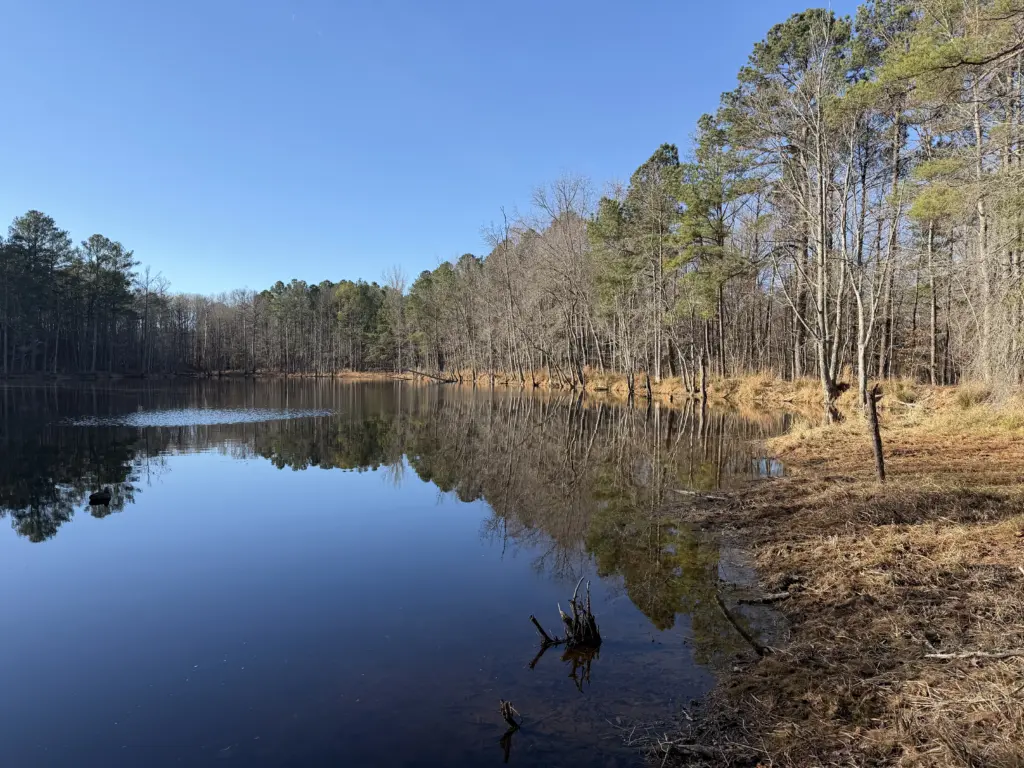
Cedar Creek Dam, where RiskHydro’s breach analysis supported an intermediate hazard classification and exempt status approved by NCDEQ.
The projects began at opposite points, but the process was the same: establish the hazard classification from modeled consequences, then evaluate the statutory size exemption. In both cases, doing that work early gave the owner a clear regulatory path.
RiskHydro helps dam owners and developers understand whether an existing classification is supported and how proposed development could change it. Services include:
If a dam’s classification was assigned years ago, was never supported by a breach analysis, or may be affected by proposed development, it may be worth another look. Contact RiskHydro to discuss the site and whether further evaluation makes sense.